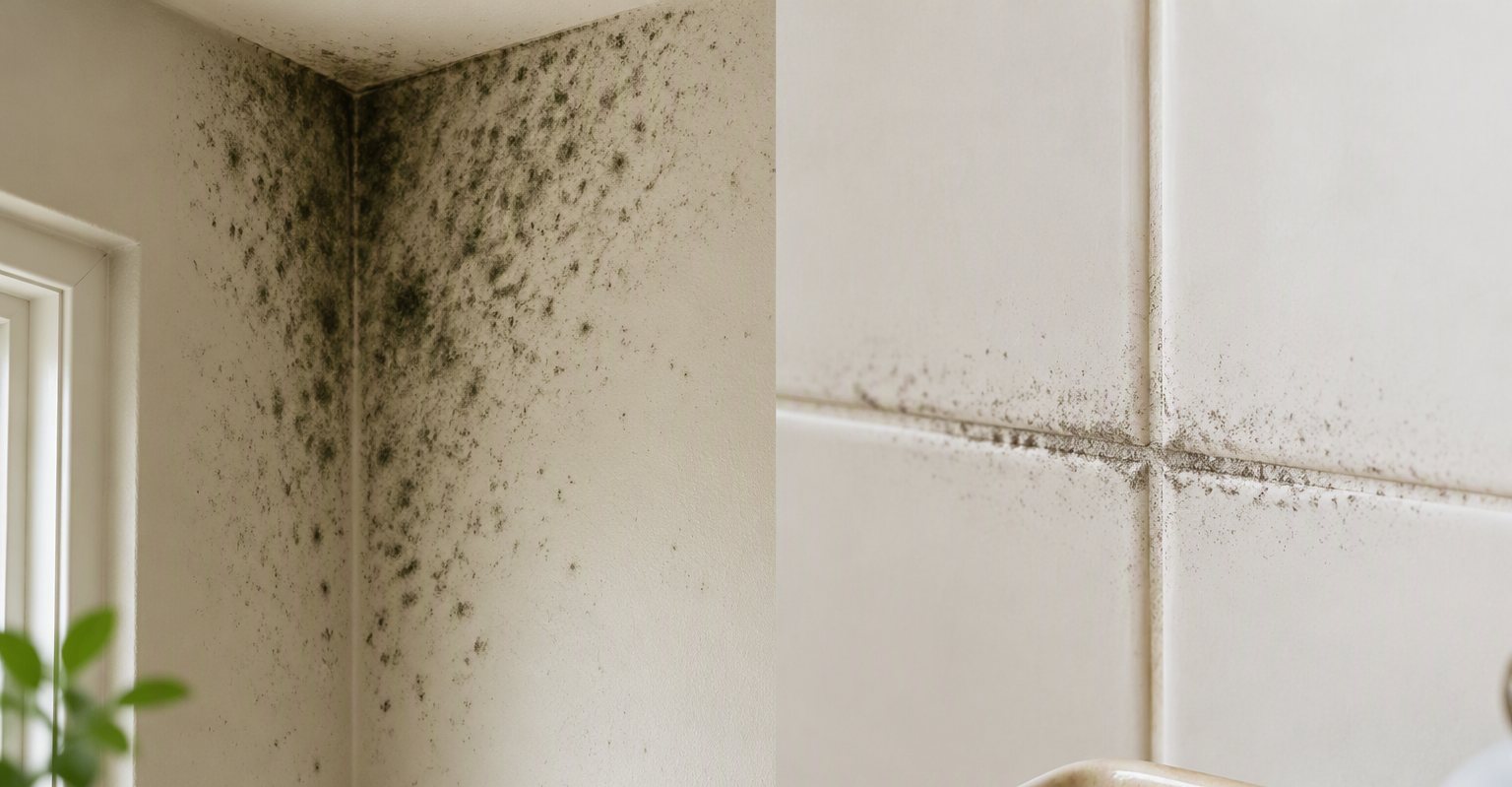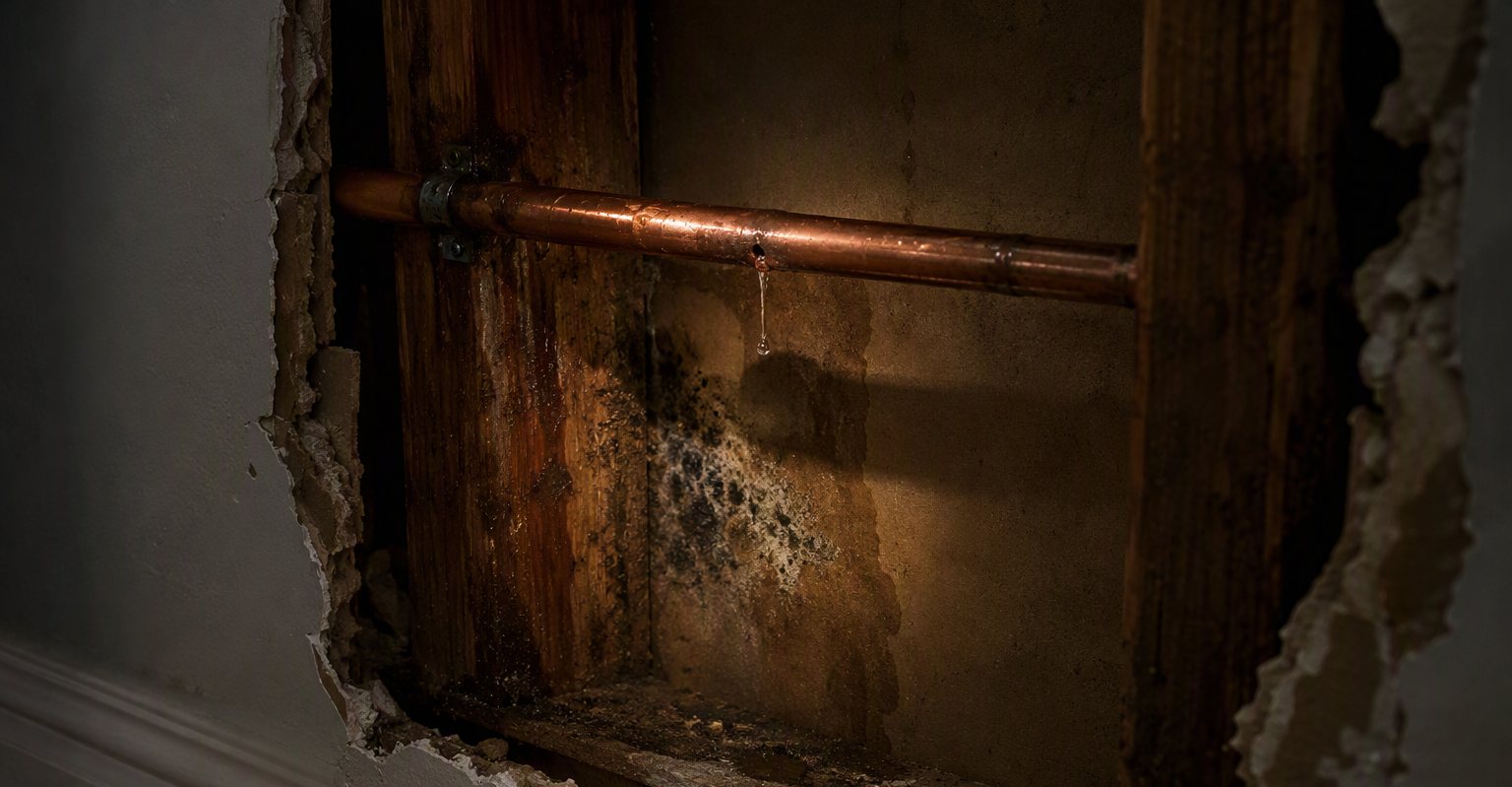
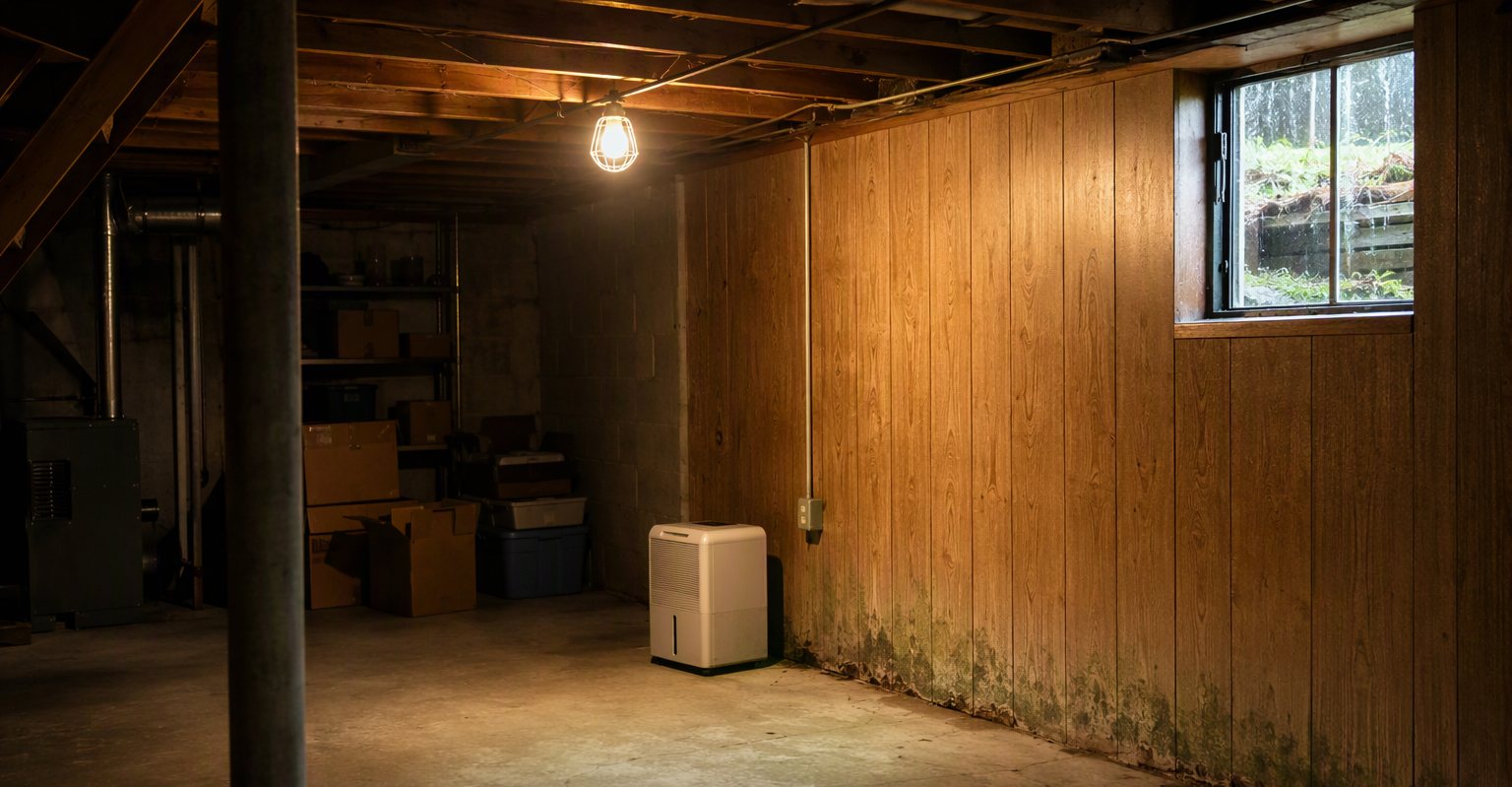
That smell has a name: microbial volatile organic compounds — the off-gassing of mold and bacteria actively growing somewhere damp. Spring is when Stark County basements hit their moisture peak: snowmelt and rain saturate the clay soil, the water table rises against the foundation, and cool basement surfaces start collecting condensation as the humid air returns. Every condition mold asks for, delivered at once.
The three moisture doors
- Through the foundation: hydrostatic pressure pushes water vapor — and sometimes liquid — through block, mortar, and even solid concrete. Efflorescence (that white mineral crust) is the receipt.
- From the air: warm, humid spring air hits cool basement walls, floors, and pipes, and condenses. A basement can grow mold with zero liquid leaks, purely on condensation.
- From above: downspouts dumping roof water at the foundation, grading that slopes toward the house, window wells filling like bathtubs. The basement gets blamed for a roof-and-drainage problem.
Why the dehumidifier never quite wins
A dehumidifier treats the air, which is one door out of three. It can’t pull moisture out of a foundation wall faster than the soil pushes it in, and it does nothing about the growth already established on the sill plate or behind the paneling. It’s a useful player — it’s just not the whole team.
The fix order that actually works
Moisture first, growth second, air third. Find and manage the water entry (drainage, seepage, condensation sources), remove or treat what’s already growing — with containment, not a spray bottle — and only then dial in dehumidification to hold the line. Done in that order, next spring smells like nothing at all.
Basement announcing the season? Call (330) 541-5225 — we map the moisture, mash the mold, and tell you plainly which of the three doors is yours.