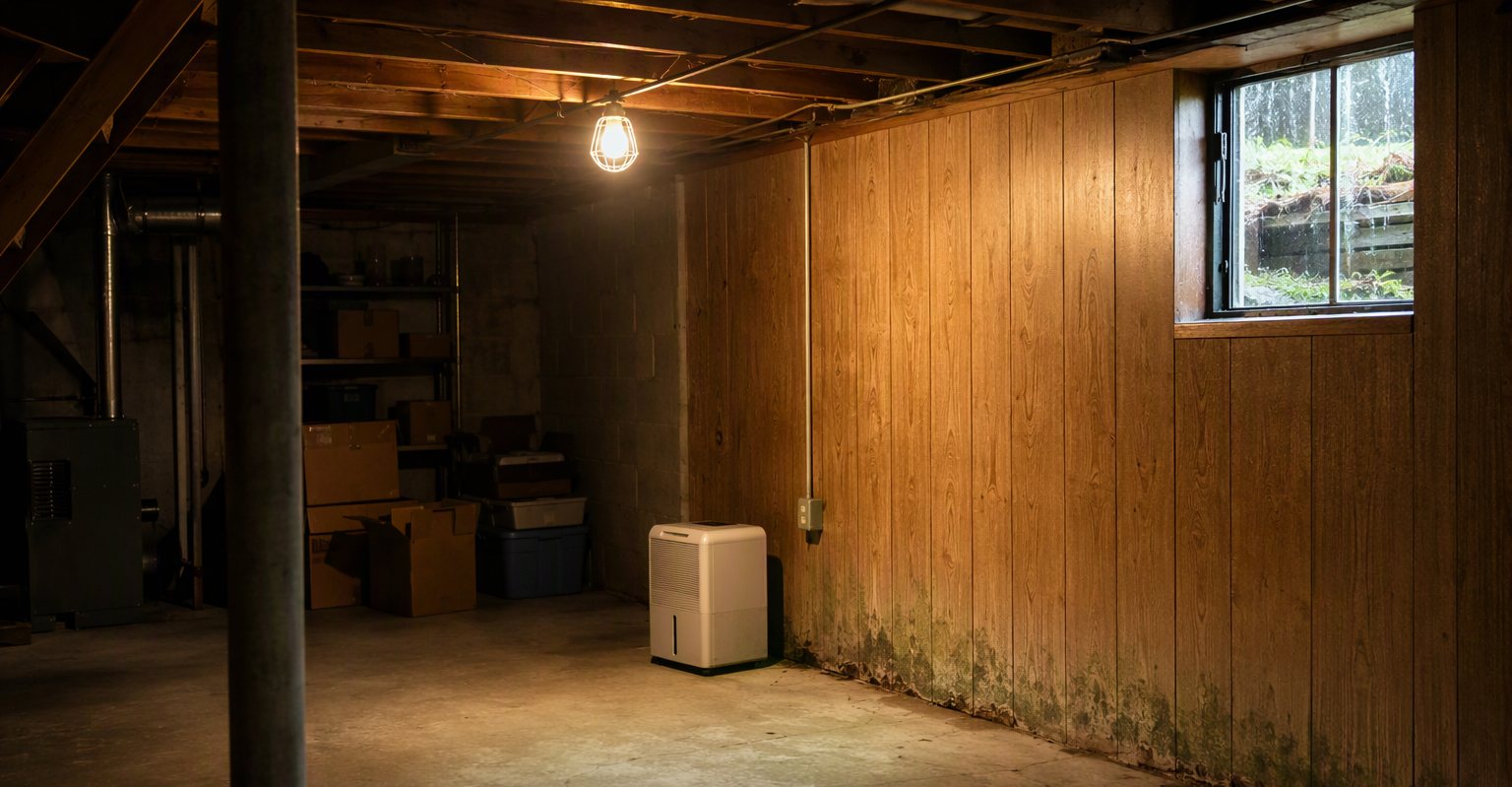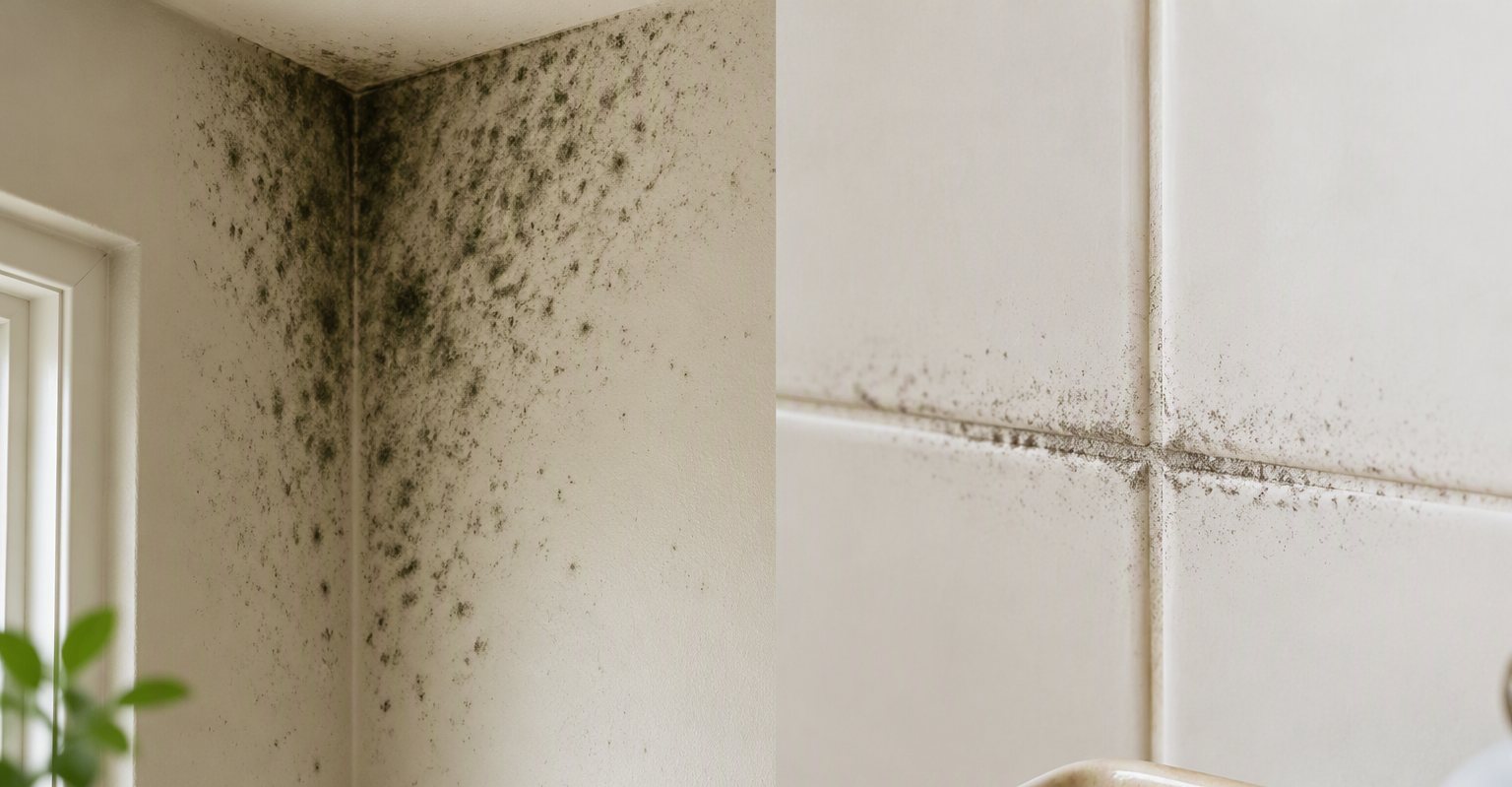
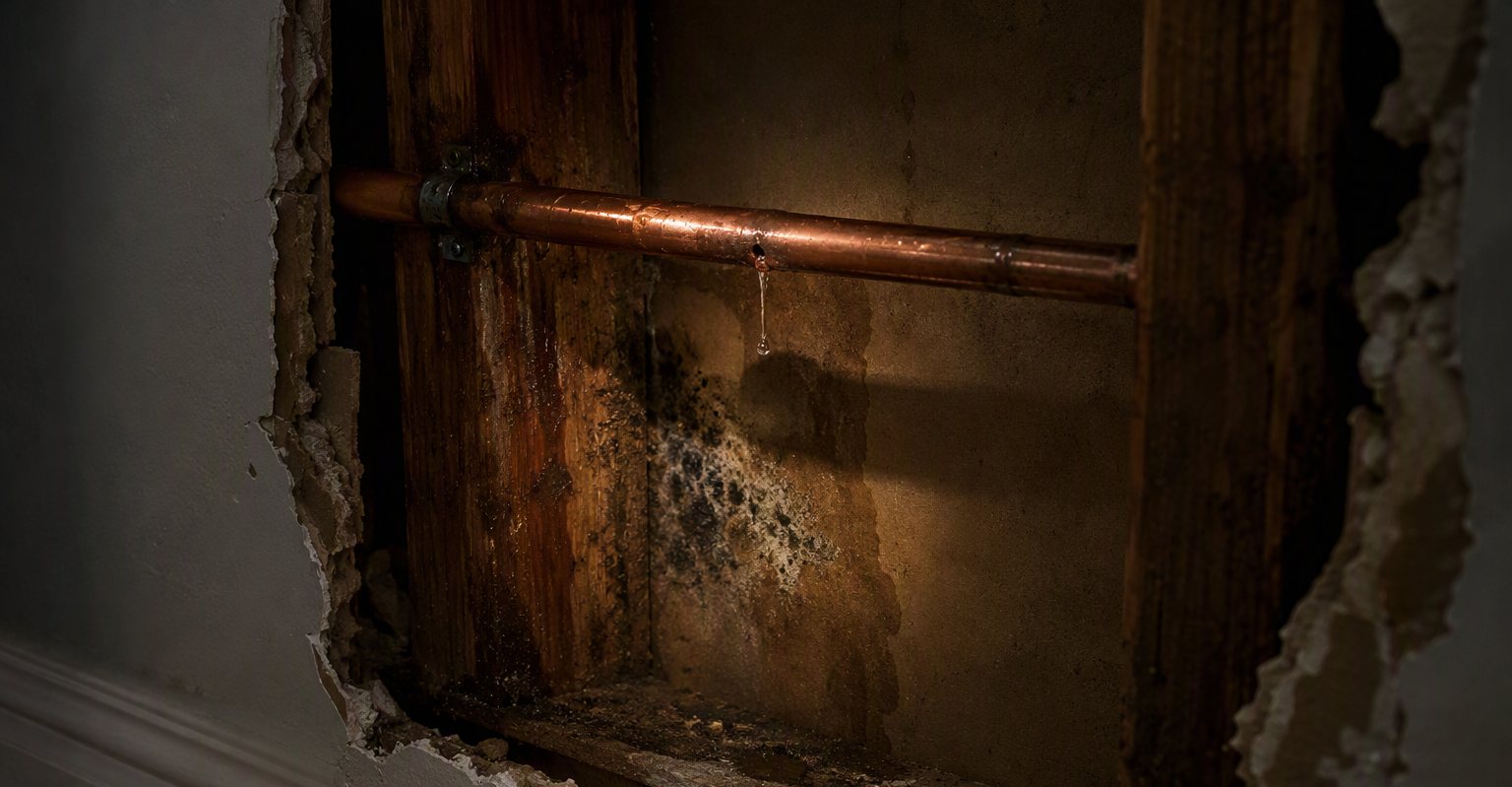
Mold spores are already in every house, dormant and harmless. They need exactly one thing to wake up: moisture that sticks around. Give drywall, wood, or carpet 24 to 48 hours of damp and the colony is off. That’s why every legitimate remediation starts with a moisture investigation, not a spray bottle.
The usual suspects
- Supply line weeps: a pinhole in a copper line or a tired fitting, dripping inside a wall at a rate too slow to notice — until the stain blooms.
- Drain and trap leaks: the slow loosening of a slip joint under a sink or tub, soaking the cabinet floor or the ceiling below.
- Roof and flashing: valleys, vent boots, and chimney flashing letting wind-driven rain into the attic deck.
- Appliances: water heaters, washing machine hoses, and dishwasher lines — the sudden-flood division.
- Condensation: not a leak at all — cold surfaces meeting humid air, quietly wetting the same spot every day.
How the water gets found
The tools are boring and decisive: pin and pinless moisture meters that read inside materials, and thermal imaging that shows evaporative cooling as a cold fingerprint on the wall. A wet zone maps in minutes — no exploratory demolition, no guessing. The meter readings also become the baseline that proves the dry-down later.
Why cleaning-first always fails
Clean a mold patch without fixing its water source and you’ve done cosmetic work on a plumbing problem. The roots stay in damp material, the moisture keeps coming, and the patch returns — usually larger, because the cleaning spread spores across the wet zone. Sequence is the product: stop the water, dry to verified readings, then remove and treat.
Stain with a mystery source? Call (330) 541-5225 — moisture mapping finds the water first, and the scope follows from there.