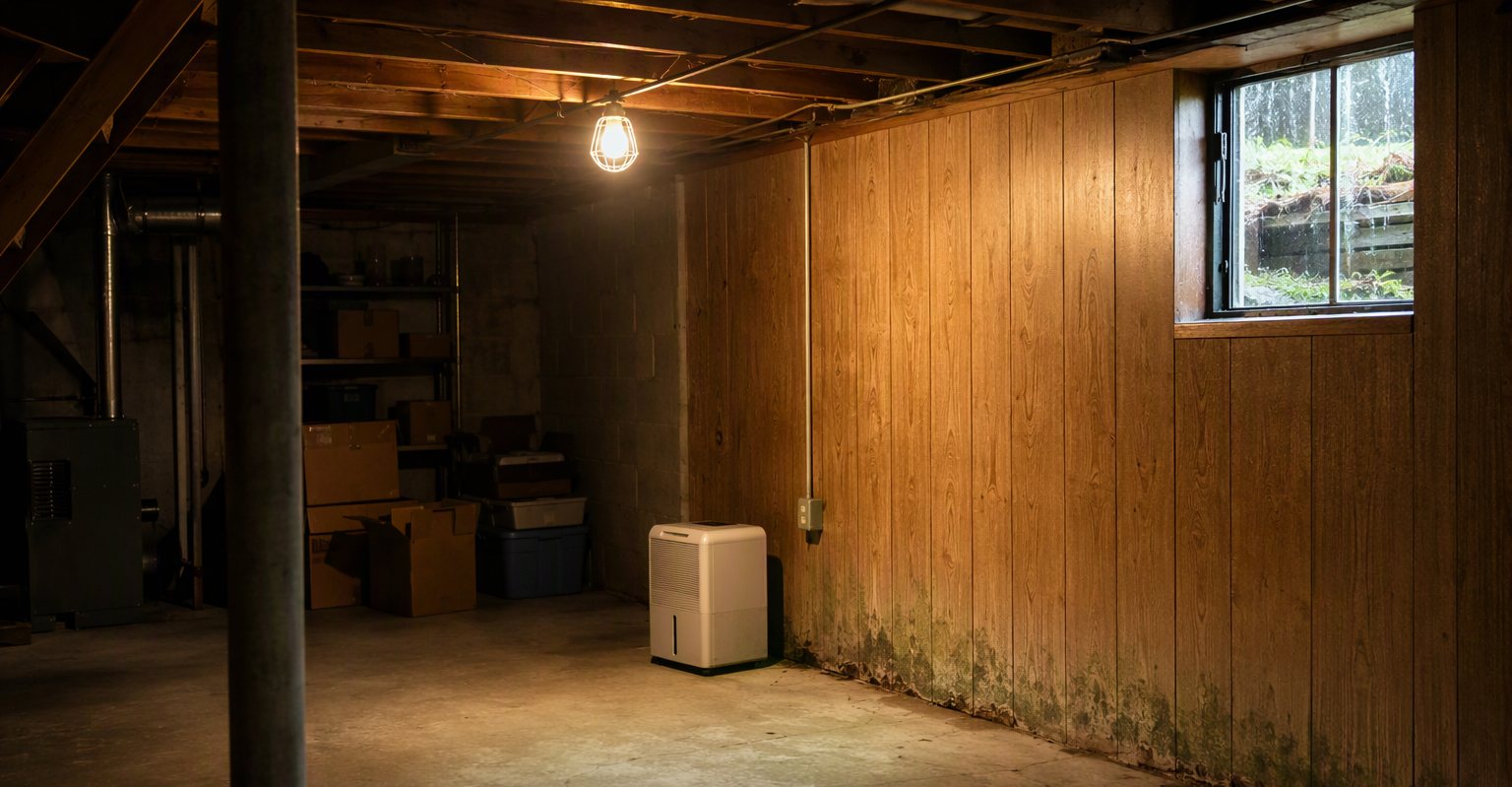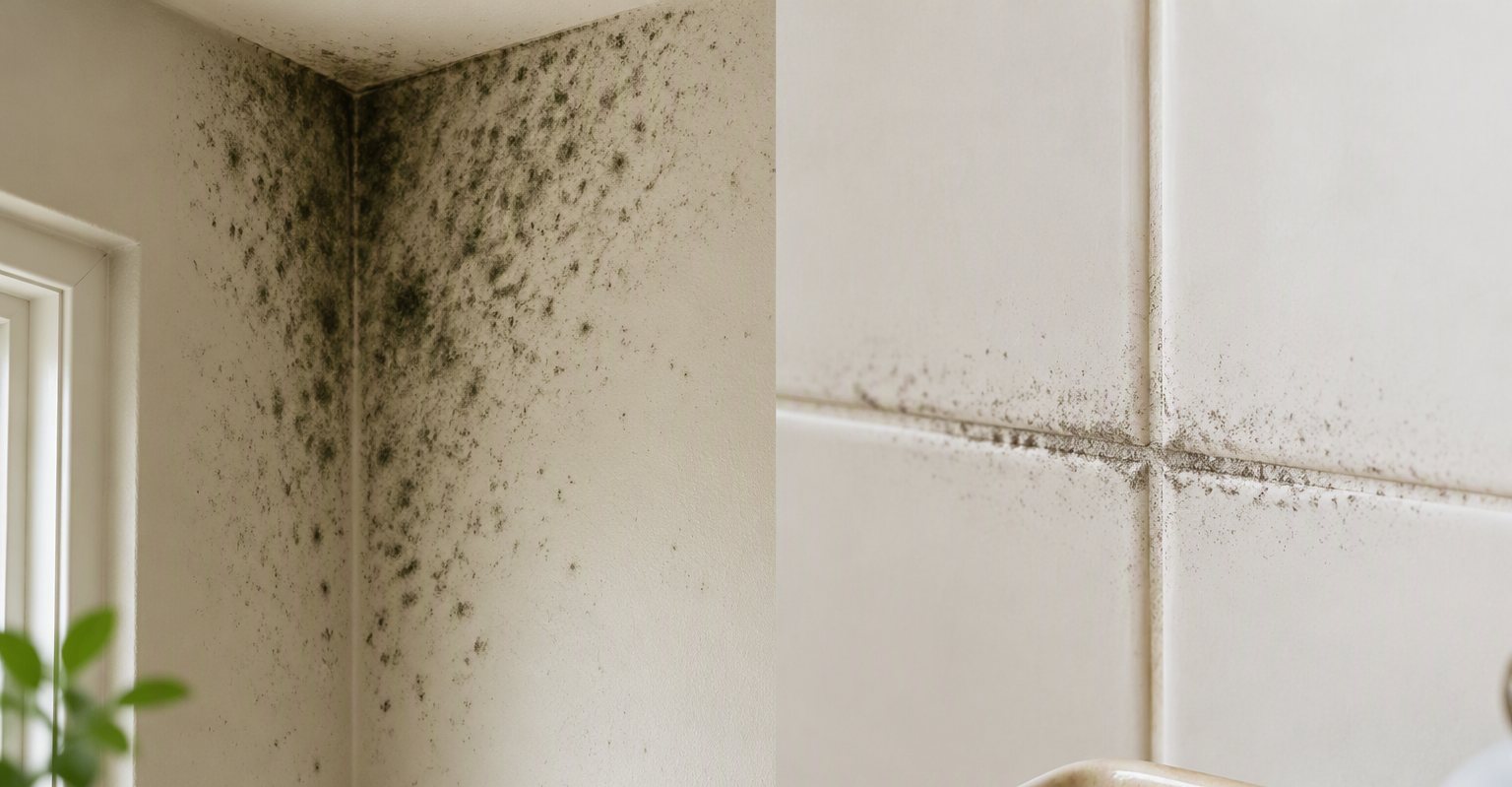
Clay is a sponge with a grudge. It absorbs water fast, drains slow, and swells against foundation walls — holding moisture in contact with your crawl space for days or weeks after the rain that delivered it. Sandy soil forgives a lot of drainage sins; our clay forgives nothing.
What wet clay does to a crawl
- Ground evaporation: a bare dirt floor over damp clay exhales moisture upward all season — gallons a day in a wet stretch.
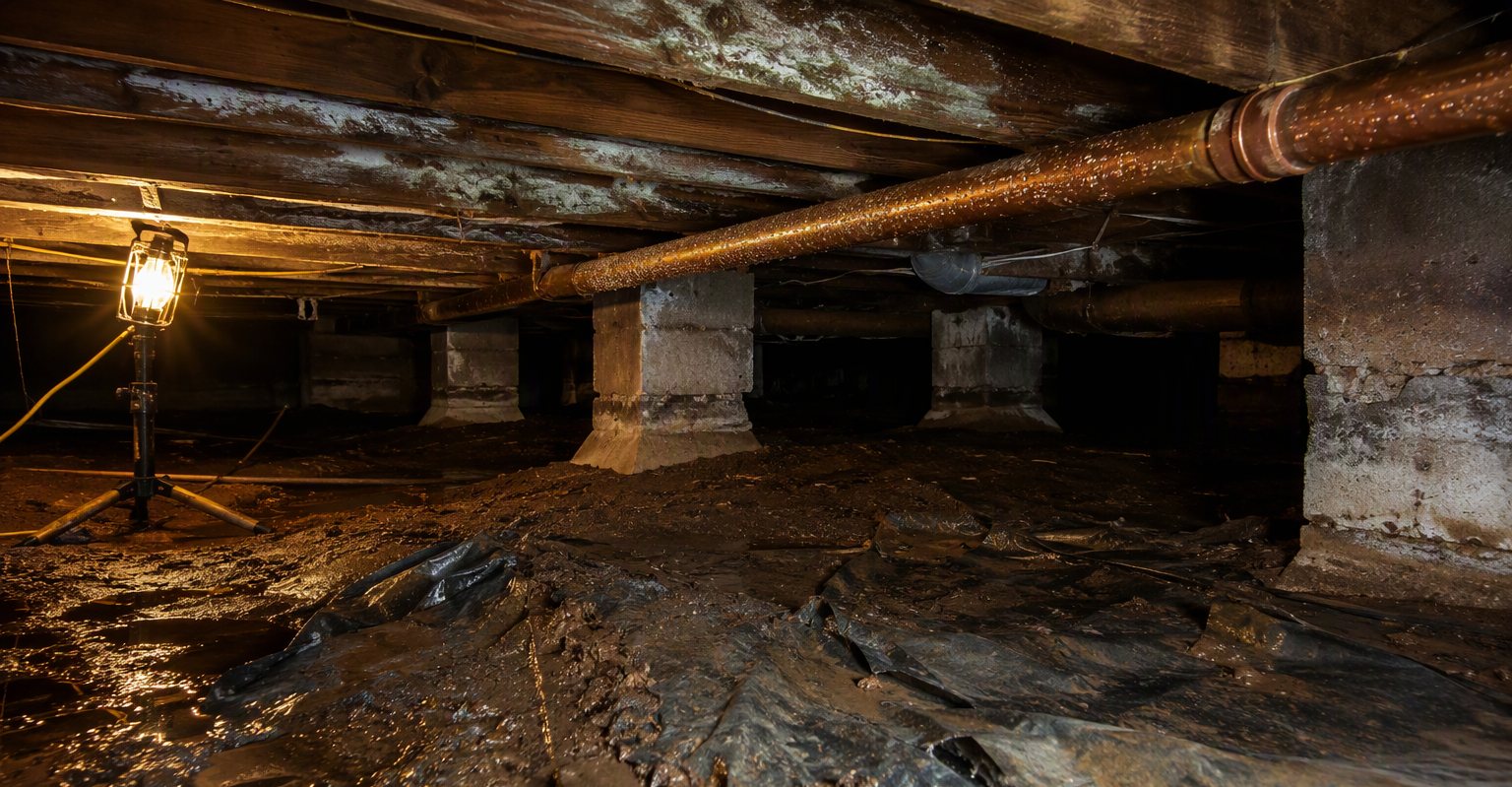
- Joist condensation: humid crawl air hits cooler wood and ductwork, and the condensation feeds mold right where the floor system lives.
- The stack effect: warm air rising through the house pulls replacement air from the crawl — meaning a share of your first floor’s air has passed through whatever is growing down there.
Reading your own crawl
You don’t need to suit up to get the headline. Open the access hatch on a dry day and take phone-flashlight photos in each direction: white or green fuzz on joists, insulation sagging like wet blankets, puddles or dark damp soil patterns, and a vapor barrier (if any) that’s torn, bunched, or missing at the seams. Those four photos tell a tech most of the story.
The fix order
Clean first, seal second, manage third. Growth on the joists gets cleaned and treated in containment; debris and failed insulation come out. Then a real vapor barrier — heavy liner, seams sealed, wrapped up piers and walls — cuts the ground’s moisture supply. Finally, humidity management: the vents-open-or-closed question answered for your specific house, and dehumidification where the clay earns it. Done in that order, the crawl stops seasoning the house.
Crawl space reporting in? Call (330) 541-5225 — the hatch photos get us started, and the moisture map does the rest.